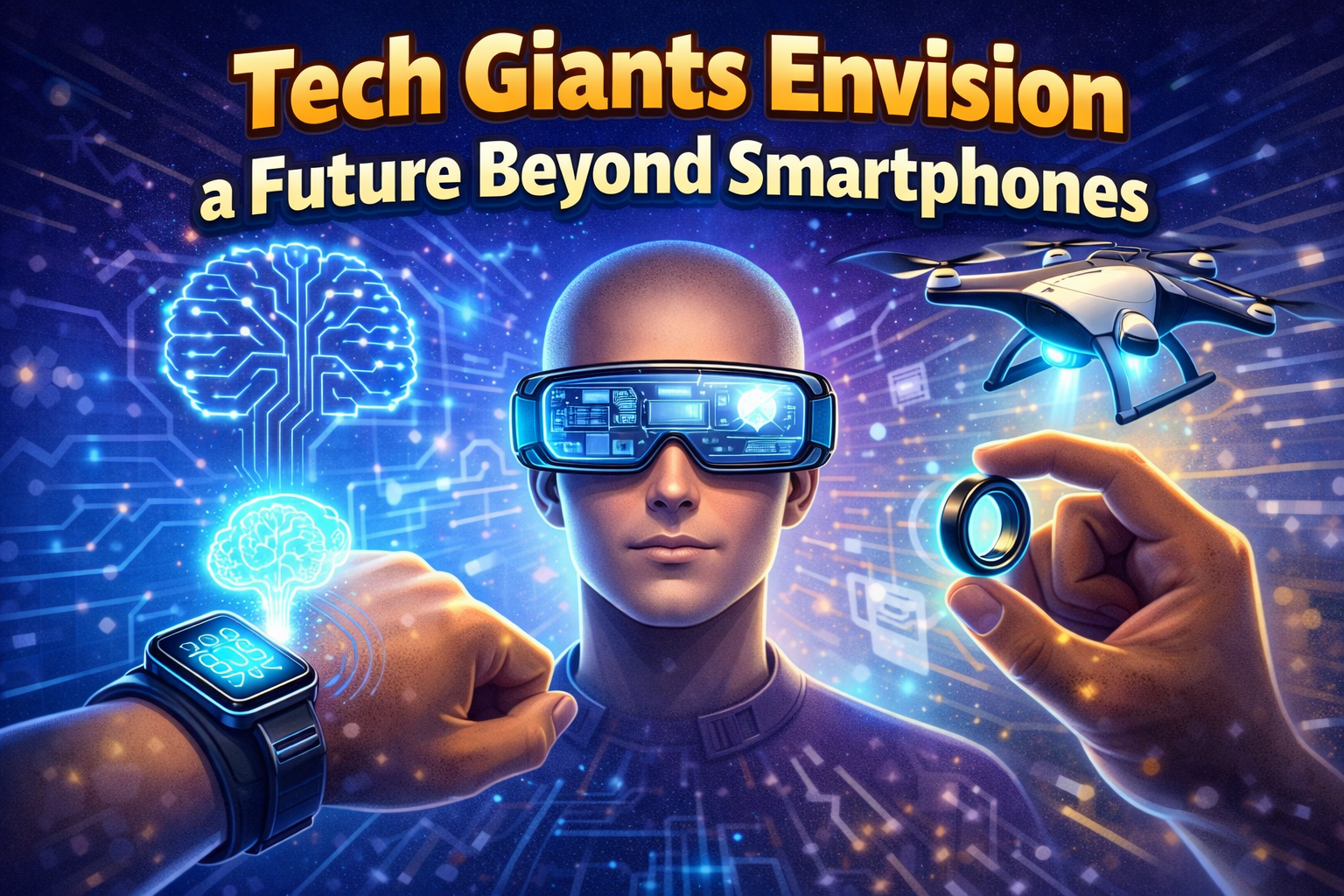
For more than a decade, smartphones have been the center of the digital world. They changed how people communicate, work, shop, and entertain themselves. However, major technology companies are now preparing for a future where smartphones may no longer be the primary device. Instead, tech giants envision a future beyond smartphones, driven by rapid innovation, changing user behavior, and breakthroughs in emerging technologies.
This shift does not mean smartphones will disappear overnight, but it does signal a major transformation in how humans interact with technology.
Why Tech Companies Are Moving Beyond Smartphones
Smartphone innovation has slowed in recent years. New models offer better cameras and faster processors, but truly revolutionary changes are rare. At the same time, consumers are demanding more immersive, natural, and seamless digital experiences.
Key reasons for this shift include:
- Market saturation with smartphones
- Limited room for hardware innovation
- Growing interest in hands-free technology
- Advances in artificial intelligence and sensors
As a result, tech companies are investing heavily in next-generation platforms.
Artificial Intelligence at the Core of the Future
AI is expected to replace many functions currently handled by smartphones. Instead of tapping screens, users may interact through voice, gestures, or even thoughts. Smart AI assistants are becoming more context-aware, predictive, and personalized.
Future AI systems could:
- Anticipate user needs
- Automate daily tasks
- Act as digital companions
- Operate across multiple devices seamlessly
This reduces reliance on a single screen-based device.
Wearables as the Next Digital Hub
Smartwatches, fitness bands, and smart rings are evolving rapidly. Tech giants see wearables as a key step toward a smartphone-free future.
Modern wearables can already:
- Track health metrics
- Receive messages and calls
- Control smart home devices
- Support contactless payments
In the future, these devices may become powerful enough to replace phones entirely.
Augmented Reality and Smart Glasses
One of the most promising replacements for smartphones is augmented reality (AR). Smart glasses could project digital information directly into a user’s field of vision.
Tech leaders believe AR glasses will:
- Eliminate the need to look down at screens
- Blend digital content with the real world
- Enhance productivity and navigation
- Transform gaming, education, and shopping
Several companies are already testing lightweight AR devices for everyday use.
Brain-Computer Interfaces and Neural Tech
Looking even further ahead, some tech giants are researching brain-computer interfaces. These technologies aim to allow direct communication between the human brain and machines.
Potential benefits include:
- Controlling devices with thoughts
- Faster communication than typing or speaking
- Medical applications for disabilities
While still experimental, this technology represents a bold vision beyond traditional smartphones.
A More Connected, Invisible Technology
The future envisioned by tech giants is not about one powerful device, but an ecosystem of connected technologies working quietly in the background. Instead of pulling out a phone, users may rely on ambient computing—technology that is always available but rarely noticed.
This includes:
- Smart homes
- Voice-controlled environments
- AI-driven automation
- Seamless cloud connectivity
Challenges Ahead
Despite the excitement, moving beyond smartphones comes with challenges:
- Privacy and data security concerns
- High development costs
- User adoption and trust
- Ethical questions around AI and neural tech
Tech companies must balance innovation with responsibility.
Conclusion
As technology continues to evolve, it is clear that smartphones may not remain the center of digital life forever. Tech giants envision a future beyond smartphones, where AI, wearables, augmented reality, and invisible computing redefine human interaction with technology.
This future promises more freedom, convenience, and immersion—but also demands careful consideration of privacy, ethics, and accessibility. The next digital revolution may not be something we hold in our hands, but something that seamlessly surrounds us.
Read More: Most Expensive Chinese Vase Sold at Auction