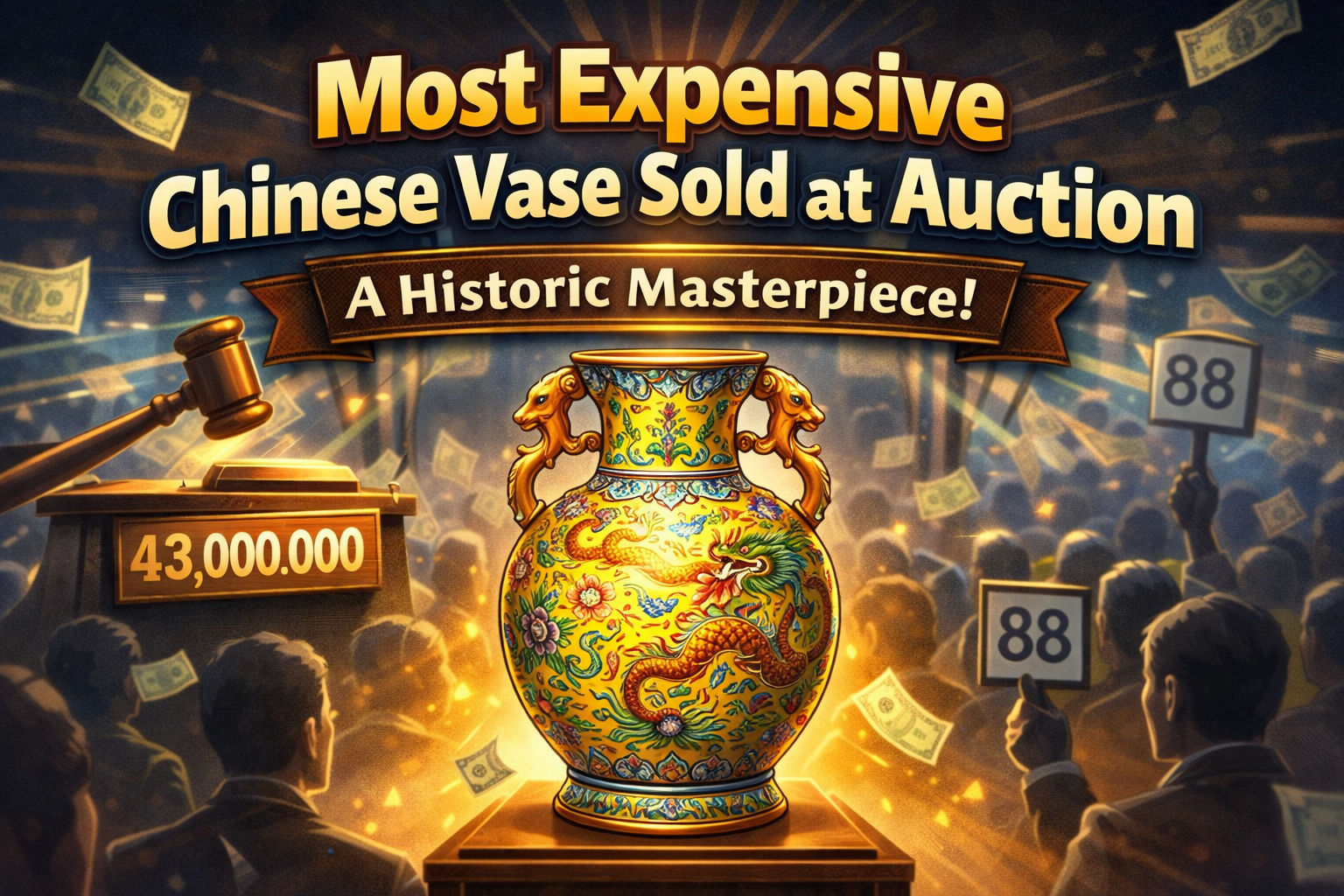
Chinese art has always held a special place in the global antiques market, but one extraordinary vase pushed that admiration to a whole new level. The title of the most expensive Chinese vase ever sold at auction belongs to a rare imperial porcelain piece that stunned collectors, historians, and investors alike with its breathtaking price.
This article explores the story behind that legendary vase, why it is so valuable, and what its record-breaking sale means for the world of art and antiques.
The Vase That Made History
The vase that holds the record dates back to the Qing Dynasty, during the reign of the Qianlong Emperor in the 18th century. This period is widely considered a golden age of Chinese porcelain, known for its technical perfection, bold colors, and imperial elegance.
What makes this vase especially fascinating is that it was not discovered in a museum or royal collection, but rather in a private European home. Its owners were unaware of its true value until experts confirmed its imperial origin. When it finally went under the hammer at a London auction, the bidding escalated rapidly and unexpectedly.
The final sale price reached tens of millions of dollars, instantly setting a world record and making headlines across the globe.
Why Was This Vase So Valuable?
Several powerful factors combined to make this Chinese vase the most expensive ever sold:
1. Imperial Connection
Porcelain created for the Chinese imperial court is far more valuable than pieces made for commercial trade. This vase was produced during the Qianlong Emperor’s reign, a ruler known for commissioning only the finest artworks.
2. Exceptional Craftsmanship
The vase displays flawless glazing, vibrant enamel colors, and perfectly balanced proportions. The level of precision reflects the highest skills of court artisans, something that is nearly impossible to replicate today.
3. Rarity
Very few imperial vases from this era survive in excellent condition. Wars, revolutions, and centuries of wear have destroyed many similar pieces, making intact examples incredibly rare.
4. Condition
Despite being over 250 years old, the vase was remarkably well preserved, with no major cracks or restoration. Condition plays a huge role in determining auction value.
The Auction That Shocked Collectors
Before the auction, experts estimated a much lower selling price. However, intense competition between international collectors—particularly from Asia—drove the bids far beyond expectations. Within minutes, the vase became one of the most expensive ceramic objects ever sold.
This sale demonstrated how strongly demand for top-tier Chinese antiques has grown, especially among buyers seeking to reclaim cultural heritage or invest in tangible assets.
Impact on the Global Art Market
The sale of the most expensive Chinese vase sold at auction changed the antiques world in several ways:
- It confirmed Chinese porcelain as a high-value investment
- It encouraged collectors to re-examine items in private collections
- It increased global interest in Qing Dynasty artifacts
- It raised auction estimates for similar Chinese ceramics
After this event, auction houses saw a surge in consignments of Asian art, as owners hoped they might possess a hidden treasure of their own.
A Symbol of Cultural and Artistic Power
Beyond its price tag, this vase represents the artistic brilliance of ancient China. It is a reminder that historical objects are not just decorative items—they carry stories of empires, craftsmanship, and cultural identity.
The record-breaking vase stands as proof that art created centuries ago can still capture the imagination of the modern world.
Conclusion
The most expensive Chinese vase sold at auction is more than just an object of porcelain—it is a masterpiece that bridges history, culture, and wealth. Its sale reshaped the antiques market and reinforced the timeless value of exceptional craftsmanship.
As interest in Chinese art continues to grow, this legendary vase will remain a benchmark for rarity, beauty, and prestige in the world of auctions.