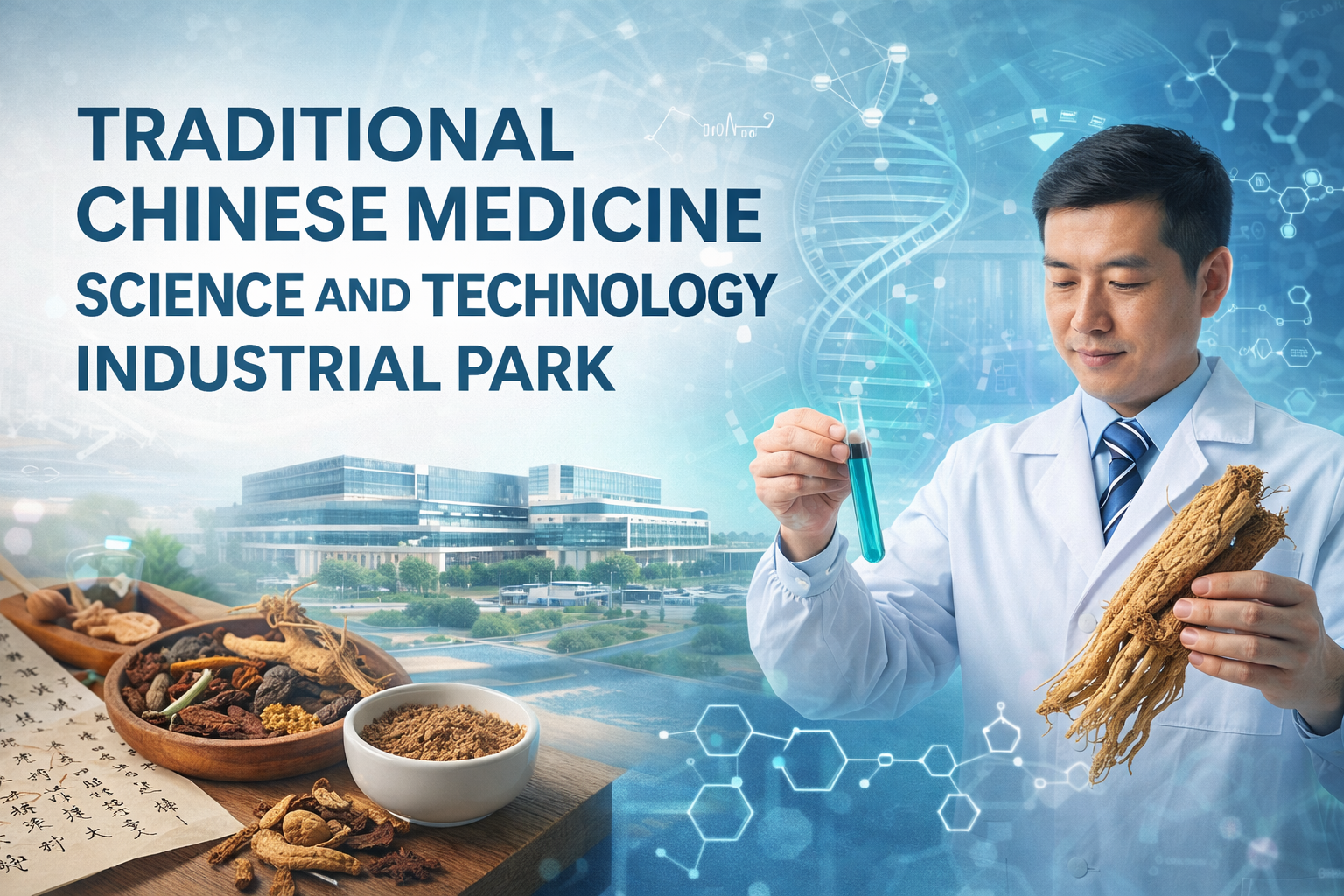
Traditional Chinese Medicine (TCM) has been practiced for thousands of years, offering holistic approaches to health and wellness. In recent decades, the integration of modern science with traditional healing methods has given rise to a new innovation model known as the Traditional Chinese Medicine Science and Technology Industrial Park. These industrial parks serve as dedicated ecosystems where ancient medical knowledge meets advanced research, biotechnology, manufacturing, and global commercialization.
This article provides a comprehensive overview of what a Traditional Chinese Medicine Science and Technology Industrial Park is, its purpose, structure, benefits, global significance, and future potential.
Key Takeaways
- TCM industrial parks combine traditional medicine with modern science and technology
- They support research, innovation, manufacturing, and global trade
- These parks help standardize and modernize traditional remedies
- They play a key role in healthcare innovation and economic growth
- Global interest in TCM continues to rise
Introduction to Traditional Chinese Medicine
Traditional Chinese Medicine is a holistic healthcare system that focuses on restoring balance within the body. It includes practices such as:
- Herbal medicine
- Acupuncture
- Moxibustion
- Cupping therapy
- Tui Na (therapeutic massage)
- Dietary therapy
TCM is based on concepts like Yin and Yang, Qi (vital energy), and the Five Elements. While rooted in ancient philosophy, modern science is increasingly validating many TCM practices through clinical research and laboratory testing.
What Is a Traditional Chinese Medicine Science and Technology Industrial Park?
A Traditional Chinese Medicine Science and Technology Industrial Park is a specialized development zone designed to support the full lifecycle of TCM innovation. These parks integrate:
- Scientific research institutions
- Pharmaceutical manufacturing facilities
- Quality testing laboratories
- Technology development centers
- Training and education hubs
- Business incubation and commercialization platforms
The goal is to modernize TCM while preserving its traditional principles.
Purpose and Vision of TCM Industrial Parks
The primary objectives of these industrial parks include:
- Advancing scientific research on TCM formulations
- Improving safety, quality, and standardization
- Encouraging innovation in herbal medicine processing
- Promoting international recognition of TCM
- Supporting startups and established enterprises
- Driving regional economic development
These parks act as bridges between tradition and innovation.
Core Components of a TCM Science and Technology Industrial Park
1. Research and Development Centers
R&D facilities focus on studying herbal compounds, pharmacology, and clinical applications. Researchers use advanced tools such as:
- Biotechnology
- Genomic analysis
- Data modeling
- Laboratory testing
This research helps validate traditional remedies using modern scientific standards.
2. Pharmaceutical Manufacturing Units
Manufacturing facilities in these parks follow strict quality control standards. They produce:
- Herbal extracts
- Capsules and tablets
- TCM injections
- Health supplements
- Wellness products
Automation and precision equipment ensure consistency and safety.
3. Quality Control and Testing Laboratories
Quality assurance is critical for global acceptance. Testing labs ensure:
- Purity of raw materials
- Accurate dosage
- Absence of contaminants
- Compliance with international regulations
This helps build trust in TCM products worldwide.
4. Innovation and Technology Platforms
Technology platforms support:
- Digital healthcare solutions
- Intelligent manufacturing systems
- Smart logistics
- Traceability of herbal ingredients
These platforms enhance transparency and efficiency across the supply chain.
5. Education and Training Centers
Many parks include institutions for:
- Professional training
- Research education
- Practitioner certification
- Knowledge exchange programs
This ensures the next generation of TCM experts is well-trained in both traditional and scientific approaches.
6. Business Incubation and Commercialization
Entrepreneurs and companies receive support through:
- Funding access
- Business mentorship
- Market expansion services
- International trade facilitation
This encourages innovation and global market entry.
Economic and Social Benefits
Economic Growth
TCM industrial parks generate:
- Employment opportunities
- Export revenue
- Investment attraction
- Regional development
They often become key economic drivers in their regions.
Healthcare Innovation
By combining tradition with science, these parks:
- Improve treatment effectiveness
- Develop new therapeutic products
- Expand preventive healthcare options
This contributes to better public health outcomes.
Cultural Preservation
Industrial parks help preserve traditional knowledge by:
- Documenting ancient practices
- Supporting heritage-based innovation
- Promoting cultural identity
This ensures TCM continues to evolve without losing its roots.
Global Impact and International Collaboration
With growing global interest in natural and holistic medicine, TCM industrial parks actively engage in:
- International research collaborations
- Global clinical trials
- Export partnerships
- Cross-border regulatory alignment
Many countries now recognize TCM as a complementary healthcare system.
Challenges Facing TCM Science and Technology Industrial Parks
Despite their growth, these parks face several challenges:
- Regulatory differences across countries
- Scientific validation requirements
- Intellectual property protection
- Sustainability of herbal resources
- Market competition
Addressing these challenges requires collaboration between governments, researchers, and industry leaders.
Sustainability and Environmental Responsibility
Modern TCM parks focus on sustainable practices, such as:
- Eco-friendly herb cultivation
- Resource conservation
- Waste reduction
- Green manufacturing processes
Sustainability ensures long-term growth and environmental protection.
Future Outlook of TCM Science and Technology Industrial Parks
The future of Traditional Chinese Medicine Science and Technology Industrial Parks looks promising due to:
- Rising global demand for natural healthcare
- Advances in biomedical research
- Integration with digital health technologies
- Supportive government policies
In the coming years, these parks are expected to play a major role in shaping global healthcare innovation.
Frequently Asked Questions (FAQs)
What is the main goal of a TCM industrial park?
To modernize traditional medicine using scientific research and technology while preserving its cultural foundation.
Are TCM industrial parks only located in China?
While most are in China, international collaborations and similar models are emerging globally.
Do these parks follow international standards?
Yes, many comply with global pharmaceutical and quality regulations.
How do they benefit patients?
They improve safety, effectiveness, and accessibility of traditional medicine products.
Can startups operate in these parks?
Yes, many parks actively support startups and innovation-driven companies.
Conclusion
The Traditional Chinese Medicine Science and Technology Industrial Park represents a powerful fusion of ancient wisdom and modern innovation. By providing a structured environment for research, production, education, and commercialization, these parks ensure that Traditional Chinese Medicine continues to evolve, gain global acceptance, and contribute to modern healthcare systems.
As the world increasingly values holistic and preventive medicine, TCM science and technology industrial parks will remain at the forefront of healthcare innovation, cultural preservation, and economic development.